Ascent CFO Solutions made the Inc. 5000 List of America’s Fastest Growing Private Companies!

The True Cost of DIY Finance: How Missed Metrics and Delayed Reporting Hurt Growth

Trying to manage your company’s finances without expert help might seem cost-effective until missed numbers and slow reporting stall your growth plans. This article breaks down how DIY finance can hold your business back.

You started your business because you had a brilliant idea and the drive to make it happen. Now you’re juggling product development, sales calls, hiring decisions, and somewhere in that chaos, you’re also trying to keep your books straight. Managing your own finances in your industry (e.g. SaaS, Retail, etc.) feels like the smart move when budgets are tight. 

But here’s what most founders don’t realize until it’s too late: DIY finance quietly drains resources in ways that spreadsheets never capture. Missed financial metrics and slow reporting don’t just create accounting headaches. They actively stall the growth you’re working so hard to achieve.

The Appeal and Reality of DIY Finance

Most founders start handling their own finances for three reasons. First, hiring a full-time CFO feels impossibly expensive when you’re still proving your concept. Second, you want control over every dollar flowing through your business. Third, trusting someone else with your numbers feels risky when the stakes are this high.

So you build elaborate spreadsheets. You subscribe to QuickBooks or Xero. You tell yourself you’ll get to the reports next week, once this big client deal closes or that product launch settles down.

But companies don’t stay simple. Your revenue streams multiply. Your expense categories explode. Investors start asking questions you can’t answer without three hours of spreadsheet archaeology. What worked at $500K in revenue becomes dangerously inadequate at $2M.

What Are “Missed Metrics” and Why They Matter

Financial metrics are the vital signs of your business. Miss them, and you’re flying blind.

Cash flow tells you whether you can make payroll next month. Burn rate shows how long your runway lasts before you need more funding. Profit margins reveal which products or services actually make you money. Revenue growth indicates whether your strategy is working or you’re just getting lucky with timing.

Here’s what happens when you lose track of these numbers. You miss early warnings that your biggest client is about to churn. You can’t explain to investors why your cash flow forecasting doesn’t match reality. You discover expense problems three months too late to fix them without layoffs.

Too many founders confidently pitch their growth story to VCs, only to stumble when asked basic questions about unit economics or customer acquisition costs. The opportunity evaporates because they couldn’t produce reliable data. The numbers existed somewhere in their systems, but not in a format anyone could actually use for decision-making.

Startup financial challenges often look like revenue problems from the outside. But dig deeper, and you’ll find they’re actually visibility problems. You can’t fix what you can’t see, and you can’t optimize what you don’t measure.

The Costs of Delayed Financial Reporting

Late financial reports don’t just slow you down. They weaken your ability to lead with clarity, protect cash, and pursue opportunities with confidence.

Decision Making Slows

Without current numbers, even simple decisions stall. Expansion plans, hiring choices, or pricing adjustments wait on data that should already be available. By the time the picture becomes clear, faster competitors have already acted.

Leadership Credibility Erodes

When decisions consistently lag, your board and leadership team begin questioning whether the financial function can support the pace of the business.

Investor Confidence Weakens

Outdated reporting signals risk. Investors assume deeper issues, which often results in tougher terms, prolonged negotiations, or deals falling apart entirely.

New Product Risks Go Unseen

Even winning products can lose money when cost structures, margins, and projections are built on outdated or inaccurate data.

Operational Risk Rises

Delayed reporting blindsides you with preventable issues like underpaying taxes, missing payroll, or misallocating funding. 

Internal Alignment Breaks Down

If the numbers behind strategy aren’t current, your team loses trust in the direction of the business. Execution slows because no one feels confident they’re moving on solid ground.

Fundraising Gets Harder

Outdated reports slow due diligence, force manual clean-up, and shift investor focus away from your potential and onto your financial controls.

When your financial foundation is shaky, every growth decision becomes slower, riskier, and more expensive. It’s clear that strong financial leadership will be critical to avoid these pitfalls. But how do you bring in an expert without taking a huge gamble on a new executive leader?

Why Fractional Finance Leadership Changes the Game

You don’t actually need a $350K full-time CFO to solve these problems. You need someone who knows how to build financial systems that give you the visibility and control you’re missing.

That’s exactly what Fractional CFO services provide. You get experienced financial leadership for a fraction of the cost, scaled to match your actual needs. Maybe that’s 10 hours a week while you’re still in early growth. Maybe it’s 20 hours during fundraising or acquisition discussions.

The value shows up immediately in three areas. First, you get proactive reporting instead of reactive scrambling. Your key metrics update regularly. Your financial stories make sense. Your board meetings focus on strategy instead of explaining why last month’s reports aren’t ready yet.

Second, you gain strategic insights you couldn’t develop on your own. Someone who’s guided dozens of companies through scaling challenges spots problems before they become crises. They’ve already seen the patterns you’re encountering for the first time.

Third, your financial strategy for scale-ups becomes something more than “try not to run out of money.” You build models that account for different scenarios. You create forecasts that actually help with planning. You develop systems that keep working as you grow, instead of breaking every time you double in size.

Cost of accounting errors add up quickly when you’re learning everything through expensive mistakes. Fractional finance leadership gives you access to expertise that prevents those errors before they hit your P&L.

The flexibility matters especially for companies operating in competitive markets. You’re not locked into a full-time hire who might not fit your needs six months from now. You’re bringing in exactly the level of support that matches your current stage and challenges.

How to Assess Your Finance Setup Today

Most founders know their financial systems need work. The question is whether those issues are merely annoying or actively dangerous to your growth.

Start by asking yourself these questions: 

  1. Can you produce accurate financial statements within five business days of month-end? 
  2. Do you track your burn rate weekly and your cash position daily? 
  3. Can you answer investor questions about your metrics without scrambling through spreadsheets for an hour? 
  4. Do you actually understand your unit economics and customer lifetime value?

If you answered no to two or more of those questions, you’ve got visibility problems that will cost you opportunities.

Here are some red flags that demand immediate attention: 

  1. You regularly discover expenses you forgot to account for in your forecasts. 
  2. Your actual spending consistently varies by more than 15% from your budget. 
  3. You can’t explain month-over-month changes in your key metrics without significant research. 
  4. You’ve delayed important decisions because you weren’t confident in your financial data.

The conversation about bringing in fractional finance expertise gets easier once you recognize these patterns. Financial systems require specialized knowledge, especially as your business grows more complex.

The assessment doesn’t need to take weeks. An experienced Fractional CFO can evaluate your current systems, identify the gaps, and propose solutions in a single conversation. The question is whether you’re ready to have that conversation before your growth stalls or after.

A Smarter Path to Growth

DIY finance looks inexpensive on your P&L. It shows up as time you’re not billing, opportunities you never see, and decisions you make with incomplete information. Those costs rarely appear in your accounting system, but they’re real and they’re significant.

Every month you operate without clear metrics and timely reporting is a month you’re navigating by gut feel in a business environment that rewards data-driven decisions. Your competitors with better financial visibility move faster, pivot smarter, and scale more efficiently.

The smartest founders recognize that financial leadership isn’t about keeping books. It’s about building systems that accelerate growth by giving you the information you need, when you need it, in formats you can actually use for decision-making.

Ascent CFO Solutions works with companies facing exactly these challenges. We provide CFO Fractional Services that give you experienced financial leadership without the full-time commitment. Our focus is helping startups and scale-ups build the financial systems they need to make better decisions and grow more confidently.

Take an honest look at your financial reporting today. If you’re seeing delays, missing metrics, or struggling to answer basic questions about your business health, those are signals worth addressing now rather than later. Your next phase of growth depends on having financial clarity before opportunities arrive, not scrambling to create it while they’re slipping away.

If you’re ready to eliminate guesswork and finally get the financial visibility your business deserves, book a discovery call with a Fractional CFO today. It’s the fastest way to get clarity, support, and a path forward grounded in real numbers.

What is the Quick Ratio Formula and Why Should I Care?

When you’re running a growth-focused business, cash is critical – critical to your ability to pay your bills, your ability to invest in your business and your ability to respond to unexpected challenges. That’s where the “Quick Ratio Formula” comes into play. It’s a simple financial health check that shows how prepared your company is to meet short-term obligations without leaning on inventory or longer conversion cycles.

At Ascent CFO Solutions, we think of the Quick Ratio as a stress test for liquidity. It helps leadership teams, investors, and lenders quickly see whether the business can cover its bills if operating cash flow tightens.

The Quick Ratio Formula

The formula is straightforward:

Quick Ratio = (Cash + Marketable Securities + Accounts Receivable) ÷ Current Liabilities

Here’s what that really means:

  • Cash: Your most liquid asset; ready to deploy immediately.
  • Marketable Securities: Short-term investments that can quickly be converted to cash.
  • Accounts Receivable (A/R): What customers already owe you and are expected to pay soon.
  • Current Liabilities: All short-term debts and obligations due within 12 months.

Unlike the Current Ratio, which includes inventory and prepaid expenses, the Quick Ratio strips things down to only those assets that can be converted into cash almost immediately.

Why It Matters

For growing companies (especially in SaaS, tech, or any business scaling quickly) liquidity risk can creep in faster than you think. A healthy Quick Ratio (commonly 1.0 or higher) tells stakeholders that you have enough liquid assets to cover your near-term obligations.

  • Above 1.0 → You can comfortably cover short-term liabilities.
  • Exactly 1.0 → You’re balanced but have little cushion.
  • Below 1.0 → Potential red flag for lenders, investors, or future fundraising.

But context matters. A SaaS company with predictable recurring revenue might operate safely at a lower ratio, while a manufacturing company with longer receivables collection  cycles may need a higher buffer.

Example Calculation

Let’s say your balance sheet shows:

  • Cash: $250,000
  • Marketable Securities: $50,000
  • Accounts Receivable: $300,000
  • Current Liabilities: $500,000

Quick Ratio = (250,000 + 50,000 + 300,000) ÷ 500,000 = 1.2

This means you have $1.20 in liquid assets for every $1.00 in near-term liabilities—a sign of solid short-term financial health.

Speak to a CFO
An Experienced CFO is Within Reach

Get right-sized financial leadership from experienced CFOs ready to lead your team.

Using the Quick Ratio in Decision-Making

At Ascent CFO, we don’t just calculate ratios—we interpret them in the context of your growth strategy. Here’s how we leverage the Quick Ratio with clients:

  • Cash Flow Planning: If your ratio is trending down, we help build forecasts and scenario plans to get liquidity back on track.
  • Investor Relations: A strong ratio strengthens your fundraising story, showing investors you can weather volatility.
  • Banking & Credit: Lenders often look at the Quick Ratio when assessing creditworthiness, especially in covenant reporting.
  • Growth Trade-offs: Sometimes, deploying cash aggressively for growth makes sense even if the ratio dips—but you need the right financial model to back that decision.

Limitations of the Quick Ratio

While the Quick Ratio is a valuable snapshot of short-term liquidity, it’s not the full picture. Over-reliance on this single metric can lead to blind spots. Here are a few things to keep in mind:

  1. Accounts Receivable ≠ Cash in Hand
    Just because receivables are included in the formula doesn’t mean they’ll be collected on time. If your business struggles with collections, the Quick Ratio may paint an overly optimistic view.
  2. Industry Variations
    Different industries have different liquidity norms. A software company with predictable recurring revenue might operate safely at a lower ratio, while a distributor with thin margins and high payables may need a higher cushion.
  3. Static Snapshot
    The Quick Ratio only reflects a single point in time. A healthy ratio today can erode quickly if cash outflows accelerate or if major receivables are delayed. That’s why trend analysis is more meaningful than looking at one number in isolation.
  4. Doesn’t Capture Profitability
    Liquidity ≠ profitability. A company may have a strong Quick Ratio but still be unprofitable. Both perspectives are needed for well-rounded decision-making.

Key Takeaway

The Quick Ratio is more than an accounting metric, it’s a confidence score for your business’s short-term resilience. It tells partners, lenders, and leadership whether your company can pivot quickly without scrambling for cash.

If you’re scaling and want to ensure your liquidity keeps pace with growth, this is exactly where a Fractional CFO adds value. At Ascent CFO Solutions, we help you not just monitor ratios, but align them with strategy, growth targets, and ROI.

Schedule a discovery call to get started.

About the Author

Matt Kelly is a seasoned Fractional CFO who transforms Finance and Accounting functions into strategic assets for founder-owned, VC-backed, PE-backed, and acquired organizations. With over a decade of experience as a full-time CFO across five successful companies, he has led teams through profitable growth, acquisitions, ERP implementations, audits, VC funding rounds, and a private equity exit. His expertise is built on 15 years in finance leadership roles at three Fortune 150 companies, where he developed deep knowledge across every aspect of corporate finance. Matt specializes in elevating businesses to enterprise-level standards in financial planning, reporting, analytics, and GAAP-compliant accounting, empowering companies to make proactive, strategic financial decisions.

What Does a Fractional CFO Do for an SMB? Key Roles and Benefits Explained

Key Takeaways

  • Fractional CFOs deliver executive-level financial leadership to SMBs on a flexible, part-time basis, providing strategic planning, advanced modeling, and cash flow management without the cost of a full-time hire.
  • Outsourcing CFO services enables SMBs to scale financial expertise as needed, integrate best practices from multiple industries, and make data-driven decisions that support sustainable growth and improved profitability.
  • Engaging a Fractional CFO typically results in measurable ROI, including enhanced planning capabilities, streamlined financial operations, and increased access to capital, positioning businesses for successful scaling.

When your business reaches $2 million in revenue, the financial decisions you face become significantly more complex than simple bookkeeping and financial reporting. Research shows that fractional CFOs act as catalysts for small and medium enterprise survival and economic growth, providing executive-level financial leadership that transforms how businesses navigate scaling challenges. This has made understanding what a Fractional CFO does for an SMB increasingly relevant as growing companies seek sophisticated financial expertise without the full-time executive cost.

The answer lies in understanding how a Fractional CFO brings the same high-level thinking as a full-time CFO but works on a part-time or project basis. They deliver financial modeling, cash flow forecasting, and growth strategy development tailored to your business stage. They bridge the gap between basic accounting functions and full-time  advanced financial leadership at the c-suite level. Professional financial guidance that scales with growth becomes the foundation for informed decision-making and long-term success. 

Ready to discover how Fractional CFO services can support your transition to executive leadership?

The Strategic Role of a Fractional CFO in SMB Growth

A Fractional CFO transforms how SMBs approach financial strategy, helping businesses establish frameworks that support decision-making at every revenue milestone. They move beyond basic reporting to create comprehensive models that adapt to changing business conditions and provide reliable projections with multiple future scenarios. This strategic approach directly answers how a Fractional CFO can help small businesses grow by building scalable foundations rather than temporary fixes.

Beyond strategic framework design, Fractional CFOs provide the forward-looking insights that become the foundation for confident scaling decisions. Fractional CFOs implement rolling 13-week cash flow forecasts and conduct scenario analyses that model the impacts of rate changes, market shifts, and growth investments. They also strengthen risk management by building liquidity buffers and internal controls.

The part-time engagement model makes this executive-level leadership accessible without the $300,000+ annual commitment of a full-time CFO, delivering strategic guidance during your most growth-focused years. Companies between $2 million and $50 million in revenue benefit most from this flexible approach, as they can scale support up or down based on current needs and growth phases. This model enables SMBs to access proven CFO expertise from professionals with Fortune 500 backgrounds who bring best practices from multiple industries. The flexibility means you get strategic leadership exactly when you need it most—during fundraising, expansion planning, or preparing for major operational changes.

Key Financial Challenges Solved by Fractional CFOs

Growing businesses often encounter financial complexities that require specialized expertise to navigate successfully. Research shows that 60% of small business owners identify cash flow management as their top concern, while many face challenges with fundraising readiness and disconnected financial systems. 

Here’s how Fractional CFO services address these common pain points:

Cash Flow Volatility Management – Implement rolling forecasts and cash management policies that provide three-month(+) cash flow visibility, helping businesses avoid cash shortages and make confident spending decisions during growth phases.

Financial Systems Integration – Connect disparate accounting platforms, reporting tools, and business intelligence systems to create a single source of truth, enabling 60% higher likelihood of maintaining profitable growth through data-driven decisions.

Strategic Planning and Forecasting – Build comprehensive financial models that adapt to changing business conditions and provide scenario planning capabilities, with 85% of businesses reporting improved capacity to plan and predict performance after engaging CFO-level expertise.

Fundraising and Capital Access – Develop investor-ready financial models and clear financial stories that improve funding outcomes.

The Value of Outsourcing CFO Services for SMBs

The most compelling reason why an SMB should consider outsourcing CFO services lies in the flexibility to scale financial leadership precisely when needed. Unlike hiring a full-time CFO with salary and benefits averaging over $300,000 annually, outsourced CFO services typically start at $5,000 monthly and can be adjusted as business needs change. This flexible approach allows companies to access senior-level expertise during growth phases, fundraising rounds, or strategic transitions without the long-term commitment of a permanent hire. When market conditions shift or priorities change, SMBs can scale their financial leadership up or down monthly rather than navigating costly hiring and termination processes.

External financial leadership brings an invaluable outside perspective that internal teams often lack. Because they work across multiple companies and industries, these professionals can quickly identify inefficiencies, challenge existing assumptions, and spot opportunities that may be invisible to those working within the business daily. Industry experts note that this objective viewpoint helps entrepreneurs move from instinct-based decisions to data-driven strategies, often revealing new ways to optimize pricing, reduce costs, or improve cash flow management. The separation from internal politics and established processes allows outsourced CFOs to ask tough questions and recommend changes that might be difficult for an internal hire to suggest.

Beyond providing objective insights, Fractional CFOs accelerate process improvement by bringing proven methodologies from diverse industries and business models. Rather than learning through trial and error, SMBs gain immediate access to best practices refined across multiple client engagements, from cloud-based financial systems to advanced forecasting techniques. This sharing of proven strategies means that a manufacturing company might benefit from retail inventory management approaches, or a service business could adopt technology sector metrics and KPIs. The result is faster implementation of financial improvements and innovation.

Real-World Impact: How Fractional CFOs Transform SMBs

The measurable Fractional CFO impact on SMBs becomes clear when examining specific business transformations across different industries.

Ascent CFO Solutions gave an international consulting company a consolidated view of five Quickbooks instances spanning three currencies, streamlined their expense management process, and built customized, dynamic financial data visualizations for executives, the CEO and the Board of Directors, ensuring both transparency and data protection.

When a commercial real estate and technology company needed urgent help to assume key leadership positions and take over critical financial tasks, Ascent CFO Solutions stepped in to serve as the Fractional CFO and Fractional Controller (on an interim basis since it required full-time support). The Ascent CFO team helped the company establish operational excellence and fill open positions in the finance department.

A global FinTech company used Ascent CFO’s Fractional CFO firm to help prepare for the sale of their business. The Fractional CFO, serving as the Interim CFO, handled maintaining the data room and presenting the financials to prospective buyers, modeling future cash flows, reengineering the client’s financial reporting process, and implementing strategies to save cash and improve margins. Ascent CFO even went as far as to challenge a prospective buyer’s IRR analysis, pointing out errors in assumptions, moving the IRR needle and expected cash flow significantly, ultimately resulting in a signed purchase agreement.

The strategic foundation these processes create becomes even more powerful when combined with advanced analytics capabilities that Fractional CFOs can bring to SMBs. Companies can gain access to scenario planning tools that model different growth trajectories, cash runway projections, and investment outcomes, allowing leadership teams to evaluate opportunities based on data rather than intuition. 

When a SaaS company can quantify that reducing churn by two percentage points translates to specific monthly revenue retention, or when a manufacturer understands exactly how inventory turns impact working capital (the cash available for daily operations), these businesses make faster, more informed strategic choices that compound over time into sustainable competitive advantages.

Unlock Strategic Growth with Fractional CFO Services

The path from mid-sized success to scalable enterprise requires more than operational excellence—it demands strategic financial leadership that grows with your vision. Research confirms that Fractional CFOs serve as catalysts for SME survival and economic growth, providing the strategic financial advice, modeling, and risk mitigation that transform growing businesses into scalable enterprises. When you partner with experienced financial leaders who understand your growth stage, you gain the confidence to make strategic decisions backed by data-driven insights and proven frameworks.

Ascent CFO Solutions delivers this transformative partnership through tailored Fractional CFO Services designed specifically for mid-market businesses ready to scale. Our flexible approach integrates seamlessly with your leadership team, providing the strategic oversight that enables you to maintain the operational focus that built your success while navigating complex growth decisions with financial clarity.

Ready to transform your financial operations into a competitive advantage? Contact us today to discover how our Fractional CFO Services can elevate your business.

About the Author

Dan DeGolier is the Founder and CEO of Ascent CFO Solutions, bringing nearly 30 years of financial expertise to help entrepreneurs master their cash flow and secure the capital needed for growth. His diverse career spans roles as a CPA with a global accounting firm, full-time CFO with multiple private companies, and now as a Fractional CFO serving businesses across technology, SaaS, manufacturing, e-commerce, professional services, and beyond. Dan specializes in cash flow forecasting and financial clarity, empowering business leaders to understand their financial position and make proactive decisions that drive sustainable growth.

Cash Flow Blind Spots: Why Growing Companies Still Struggle to Make Payroll

The Hidden Truth: Cash Moves on Its Own Schedule

Growing companies often look successful on paper. Your revenue is rising, your team is expanding, and the business looks healthy. So why does payroll still feel like a panic button every other Friday? 

This tension has very little to do with profit; it’s about how cash actually moves through the business. It’s usually the result of blind spots that quietly form as a company scales, eventually creating a cycle where payroll becomes a guessing game instead of a predictable routine and the founder’s intuition no longer suffices.

One of the first signs of trouble appears when revenue and payroll stop moving in sync.

Billing Cycles vs. Payroll Timing

Agencies, contractors, manufacturers, and SaaS firms often bill clients on net-30 or net-45 terms, yet payroll runs every two weeks. That lag forces the business to finance its own operations in the gap between earned and collected revenue. Service businesses experience this constantly.

Simple changes help: bill earlier in the cycle, collect partial payments upfront, and maintain an operating reserve of at least one payroll cycle. Aligning billing and payroll timing prevents constant cash crunches.

Even when billing is managed perfectly, payroll stress can still surface, because the real issue often lies deeper.

Payroll Is a Signal, Not the Root Problem

A tight payroll cycle rarely starts as a payroll problem. It starts as underpriced projects, late invoices, and soft collections. The tension finally surfaces when it’s time to pay the team.

Companies that stay ahead of this track metrics like Days Sales Outstanding (DSO), current ratio, forecast accuracy, and cash conversion cycle. These numbers predict payroll risk weeks before it becomes visible.

In general, DSO should be within 5-10 days of the stated terms you offer customers, and a healthy current ratio is typically 1.2 – 2.0. By understanding and tracking these metrics, you can recognize the early warning signals.

Quick Self-Check

Ask three questions:

  • Do you know your cash position for the next 13 weeks?
  • Can you identify which clients or projects delay cash the most?
  • Does your finance team close the books within 10 business days every month?

Any “no” points to a blind spot worth fixing. Once those blind spots are identified, the next step is to replace reaction with structure.

How Growing Companies Regain Control

Businesses that stabilize cash flow share a few common habits. They forecast consistently, meet weekly to discuss liquidity, and close the books on time. These practices form the foundation of financial stability.

1) Build a Rolling 13-Week Forecast

List inflows tied to invoice dates and outflows tied to payroll, vendor terms, and taxes. Update weekly. Keep it short and visual enough for everyone on the leadership team to understand. Payroll should be prioritized as a non-negotiable expense within the rolling forecast. When the company is in a short-term crunch, identify and potentially defer non-essential spending, such as travel and discretionary projects.

2) Hold a Weekly Finance Huddle

Spend fifteen to thirty minutes reviewing the current cash position, upcoming changes, and key decisions. The goal isn’t reporting—it’s alignment.

3) Run a Clean Monthly Close

Close on schedule, reconcile every account, and publish a short variance report. Mark anything that affects liquidity in the next month.

4) Tune Working Capital

Adopt progress billing, request deposits for custom work, and standardize follow-ups for late payments. Negotiate longer vendor terms before you need them, and shorten payment terms with customers from net-30 to net-15.

5) Build a Real Safety Net via Cash Reserves and a Line-of-Credit

Establish a bank line of credit when your cash flow is strong, ensuring it’s available when cash flow is getting squeezed. Build a relationship with a banker early on, and use the line of credit with discipline rather than desperation—remember, a line of credit can bridge temporary cash flow gaps but it doesn’t solve chronic losses. Maintain cash reserves equal to one or two payroll cycles alongside a line of credit to cover seasonal fluctuations. Keep your cash reserve in a separate account if possible, and consistently add 1-2% of monthly revenue to build a solid safety net.

How Ascent CFO Solutions Helps Companies Fix Cash Flow Blind Spots

Ascent CFO Solutions works with scaling businesses that want to stop guessing and start leading with confidence. Our Fractional CFO services combine forecasting, financial modeling, and cash management into a steady rhythm that keeps growth predictable.

Our approach transforms what feels like constant cash flow firefighting into a structured rhythm that scales with your business. Here’s what that process looks like in action, and the tangible results it creates.

Ascent CFO Cash Flow ProcessResult
Build a 13-week rolling cash flow modelProactive planning and longer-term visibility
Establish weekly finance meetingsNo surprises, full documentation
Implement a reliable monthly closePredictable process and team alignment
Strengthen collections and billing processesEliminate gaps between earned and collected revenue—no payroll emergencies
Train internal staff to maintain clean numbersData becomes reliable and consistent
Create and refine robust dashboards that translate complex data into clear messagingLeaders regain confidence in data-driven decisions

Once these systems are in place, cash flow moves from uncertainty to control—freeing leadership to focus on growth instead of survival.

Get the Financial Clarity Your Team Deserves

If you’re tired of last-minute transfers, stressful payroll weeks, or cash surprises that disrupt growth, it’s time to bring structure to your financial operations. Schedule a consultation with Ascent CFO Solutions to build the forecasting, discipline, and stability your company needs to grow with confidence.

Below are answers to some of the most common questions we hear from leaders facing payroll challenges.


FAQs

Why do companies struggle with payroll even when revenue is strong?

Because revenue and cash rarely move at the same speed. Clients pay on net 30 or net 45 terms, often late, while payroll hits every two weeks. Without a structured cash flow forecast and disciplined collections, timing gaps create payroll pressure even in profitable companies.

What is the most common cash flow blind spot for growing businesses?

Not having a rolling 13-week cash forecast. Many leadership teams rely on static spreadsheets or bank balance snapshots, which do not show what will happen in the next several pay cycles. Without forward visibility, payroll surprises are inevitable.

How does a weak monthly close affect payroll?

If the books don’t have a concise and regular closing cadence, financial reports become inaccurate and outdated. A lack of financial clarity leads to poor decision-making and unreliable forecasting. A fast, consistent monthly close is essential for predicting payroll risk.

What habits help companies prevent payroll crises?

Healthy companies maintain a weekly finance huddle, update a 13-week forecast, standardize collections, and run a clean monthly close. These habits replace guesswork with a predictable financial rhythm that keeps payroll steady.

What is the biggest challenge of payroll?

The hardest part of payroll is timing. Salaries, benefits, and taxes must be paid on fixed schedules, even when client payments arrive late. For growing companies, managing this gap requires accurate forecasting and strict cash discipline. Without both, payroll becomes a recurring emergency instead of a routine process.

Why is payroll so difficult?

Payroll blends compliance, timing, and cash flow management. Taxes, benefits, and state filings can change. Add late receivables or inaccurate forecasting, and even profitable companies can miss deadlines. The challenge isn’t the math—it’s maintaining process consistency as the company scales.

What happens if a company doesn’t make payroll?

Missing payroll can trigger serious consequences. Employees can file wage claims, which lead to fines and legal action. Repeated delays damage morale and reputation, making it harder to hire or retain top talent. In some states, executives can even face personal liability for unpaid wages. Establishing cash flow visibility prevents this scenario long before it reaches crisis level.

How can Ascent CFO Solutions help stabilize payroll and cash flow?

Ascent CFO Solutions builds short-term cash forecasts, sets up weekly liquidity reviews, improves billing and collections systems, and installs a reliable monthly close process. This creates clear visibility, stronger cash discipline, and confidence that payroll will consistently run on time.


About the Author

Dan DeGolier is the Founder and CEO of Ascent CFO Solutions, bringing nearly 30 years of financial expertise to help entrepreneurs master their cash flow and secure the capital needed for growth. His diverse career spans roles as a CPA with a global accounting firm, full-time CFO with multiple private companies, and now as a Fractional CFO serving businesses across technology, SaaS, manufacturing, e-commerce, professional services, and beyond. Dan specializes in cash flow forecasting and financial clarity, empowering business leaders to understand their financial position and make proactive decisions that drive sustainable growth.

How to Stay Strategic and Proactive in Uncertain Market Conditions

Key Takeaways

  • The most successful businesses become even more strategic and proactive in uncertain market conditions.
  • Implement dynamic financial planning tools to proactively manage risk and maintain momentum during market volatility.
  • Codify and automate key operating levers, so your team can respond rapidly and systematically to changing conditions.
  • Integrate real-time financial dashboards and early-warning indicators across your systems to spot trouble early, enabling data-driven decisions and preserving your company’s runway and profitability.

Recent research shows that uncertain market conditions shift companies toward short-term thinking. At Ascent CFO Solutions, we’re seeing this firsthand with our clients—CEOs are asking urgent questions: Are we in a bubble? What will happen next to my pricing on imported materials? Are the labor and consumer demand signals I’m seeing real warning signs?

The first instinct in uncertain times may be to wait and see what happens – to defer on an investment or pause on a set strategic course until the way forward seems more clear.

However, our experience is that the most successful businesses coax themselves to become even more strategic and proactive under such conditions. This doesn’t mean taking unnecessary risks, but rather looking closely at the potential changes afoot and planning out the most successful strategies for each potential change.

In uncertain market conditions, waiting is actually a decision that can burn runway and erode margins. The companies that thrive don’t just wait and see—they build proactive risk monitoring systems that turn volatility into competitive advantage. 

These are some of the ways we operationalize resilience for our clients: a 13-week cash flow model, rolling forecasts with scenario triggers, pricing guardrails that protect margins, and real-time financial dashboards that spot trouble before it hits a company’s P&L. These aren’t theoretical frameworks—they’re the tactical systems that keep growth-stage companies moving forward when others freeze up. 

Let’s dig into each of these proactive strategies.

Building Financial Resilience With Forecasts and Scenario Triggers

As a scaling company, you’re balancing aggressive growth targets with the reality that market conditions can shift overnight. Building true financial resilience during uncertain market conditions requires moving beyond static financials and budgets to dynamic planning systems. 

Implement Multi-Scenario Rolling Forecasts With Clear Triggers

We recommend establishing a rolling 13-week cash flow forecasting model alongside an 18-month rolling forecast that covers three to six distinct scenarios. As explained by Wall Street Prep, rolling forecasts provide continuous planning over a set time horizon, avoiding the problem where budgets become less relevant as the year progresses. Each scenario should tie to explicit triggers—for example: tariff bands of 10%, 25%, and 40%, foreign exchange ranges within 5% bands, or demand shifts of 15% quarter-over-quarter. When triggers activate, you’ll know exactly which playbook to execute. This transforms uncertainty into manageable, plannable scenarios.

Codify Your Operating Levers for Rapid Response

Speed matters when conditions change, especially when you’re scaling operations across multiple fronts. We help clients pre-define their operating levers: procurement timing shifts, pricing guardrails that maintain target margins, hiring gates tied to revenue thresholds, and operational expense flexing protocols. When your team knows exactly which levers to pull and when, your response time drops dramatically. Document these decisions now, while you have time to think strategically rather than reactively.

Protect Liquidity With Clear Thresholds

Liquidity protection comes first in any uncertainty playbook, particularly when you’re funding growth initiatives. Define your minimum cash threshold and revolver limits upfront—I typically recommend maintaining 90 days of operating expenses as a floor. Cash flow management becomes the central operational priority during volatile periods. Update your assumptions often, and align these runway decisions with your board communication schedule. This creates a rhythm where everyone understands the financial guardrails and can make informed decisions within them. If you need support implementing these rolling forecast systems and cash flow models, our leadership team brings deep experience helping scaling companies build these financial frameworks.

Proactive Pricing, Procurement, and Margin Protection

When uncertain market conditions shift, your pricing and procurement decisions determine whether you preserve margins or watch them erode. We help CEOs build systematic guardrails that protect profitability before market pressure impacts your bottom line.

Here are examples of how we structure these proactive pricing and procurement strategies:

  • Set tiered price adjustments for raw material increases with pre-written customer communications to maintain target contribution margins
  • Build 3-tier procurement playbooks for low, medium, and high tariff scenarios to time purchases and diversify suppliers strategically
  • Run monthly contribution margin waterfalls by SKU or customer using real-time dashboards to identify profitability compression trends
  • Trigger immediate margin actions when targets slip—cost renegotiation, product mix shifts, or packaging changes with clear timelines
  • Link procurement timing to your cash flow forecasts and currency hedging positions for optimal working capital

Operate on Early-Warning Signals and a Single Source of Truth

Leading indicators can signal trouble weeks before it hits your P&L. For example, pipeline-to-bookings ratio, net revenue retention, days sales outstanding (DSO), inventory turns, and hiring funnel pass-through rates can give companies advance warning when market conditions shift. Our Fractional CFOs help companies identify and validate their specific leading indicators rather than choosing them by intuition alone or following industry standard metrics. Companies can set specific thresholds for each metric and configure alerts so your team can respond when indicators cross warning levels.

To make these indicators actionable, the real power emerges when you integrate your financial, operational, HR, sales and marketing systems into one dashboard that becomes your single source of truth. Integrated systems enable real-time coherent views for better scenario planning decision-making. 

It’s possible to take charge of your financial future in uncertain times. If you’re looking to stay more front-footed and win this period of uncertainty, Ascent CFO Solutions is here to help you empower your business with proactive strategies and expert guidance. Schedule a call with a Fractional CFO today.

About the Author

Matt Kelly is a seasoned Fractional CFO who transforms Finance and Accounting functions into strategic assets for founder-owned, VC-backed, PE-backed, and acquired organizations. With over a decade of experience as a full-time CFO across five successful companies, he has led teams through profitable growth, acquisitions, ERP implementations, audits, VC funding rounds, and a private equity exit. His expertise is built on 15 years in finance leadership roles at three Fortune 150 companies, where he developed deep knowledge across every aspect of corporate finance. Matt specializes in elevating businesses to enterprise-level standards in financial planning, reporting, analytics, and GAAP-compliant accounting, empowering companies to make proactive, strategic financial decisions.

Why Is Ascent CFO Solutions a Top-Rated Fractional CFO Company for Startups and Scale-Ups?

Key Takeaways

  • Ascent CFO Solutions provides startups and scale-ups with flexible, senior-level financial leadership, integrating deeply with client teams to deliver strategic guidance and real-time business intelligence.
  • The firm’s proactive, transparent approach ensures trust, responsiveness, and customized financial strategies that evolve with each client’s growth stage, from early startup to post-funding scale.
  • By leveraging fractional CFO services, clients gain immediate access to expert financial modeling, cash flow forecasting, and investor-ready reporting—achieving significant cost savings compared to full-time hires.

What happens when a promising startup or scale-up reaches the point where its founder becomes overwhelmed by financial complexities—from cash flow forecasting to investor reporting—while trying to maintain operational momentum? 

Many high-growth companies find themselves caught between needing sophisticated financial leadership and lacking the resources for a full-time CFO hire. This creates a dangerous gap where critical financial decisions get delayed, growth opportunities are missed, and founders become bottlenecks in their own organizations. The challenge intensifies as companies scale, requiring more complex financial modeling, investor-ready reporting, and operational financial systems that most founders simply don’t have time to do or master. This challenge has given rise to an increased need for Fractional CFO services that provide experienced financial leadership on a flexible, part-time basis. 

Today’s leading Fractional CFO providers go far beyond basic consulting to deliver comprehensive financial guidance that includes real-time reporting, cash flow forecasting, fundraising support, and seamless integration with executive teams. What distinguishes exceptional firms is their ability to adapt quickly to each client’s unique growth stage while maintaining the long-term vision needed for sustainable scaling. Understanding this landscape reveals why Ascent CFO Solutions has become a top-rated Fractional CFO company, earning recognition through our Inc. 5000 ranking and delivering measurable results for startups and scale-ups through our collaborative Fractional CFO services. Our approach of becoming integrated team members rather than external consultants demonstrates how we work to transform financial operations into growth engines.

What sets a top-rated Fractional CFO company apart?

The best Fractional CFO companies stand out by combining strong financial backgrounds with big-picture business thinking that extends far beyond basic bookkeeping. According to recent research, top-performing Fractional CFOs combine formal qualifications like MBA degrees and CPA or CFA certifications with hands-on scaling experience in fundraising, mergers and acquisitions, and operational turnarounds. Companies like Ascent CFO Solutions exemplify this approach by offering comprehensive services that include financial modeling, cash flow forecasting, fundraising strategy, and M&A support, ensuring clients receive both strategic oversight and practical implementation.

Beyond expertise alone, flexibility and scalability represent another defining characteristic of top-tier providers, allowing businesses to access exactly the financial leadership they need at each growth stage. Industry analysis reveals that leading firms offer engagement models ranging from a few hours per week to interim full-time coverage, adapting seamlessly as companies evolve through startup and scale-up phases. This scalability extends beyond time commitment to include supporting team members—Ascent CFO Solutions provides fractional accounting services with Controllers, Accounting Managers, and Financial Analysts who can scale up or down with business needs. The ability to customize service delivery while maintaining strategic continuity allows growing companies to avoid the common pitfall of outgrowing their financial leadership or overpaying for capabilities they don’t yet need.

The most impactful Fractional CFO companies master “psychological ownership”—creating such seamless integration with leadership teams that fractional executives feel like dedicated full-time partners. Research from SHRM identifies three attributes that drive this success: exceptional accessibility and responsiveness, intimate knowledge of the business through deliberate relationship-building, and active co-creation in strategic processes. Top providers embed their Fractional CFOs in regular leadership meetings, strategy sessions, and board preparations, ensuring they contribute meaningfully to decision-making rather than simply producing reports. This integration approach, combined with proactive communication and deep understanding of each client’s unique challenges, transforms the fractional relationship from a service engagement into a true strategic partnership that drives sustainable growth through tailored financial strategies.

1: Integrity and responsiveness at the core

Building a successful Fractional CFO relationship starts with trust, and research shows that 72% of investors identify trust as the most important quality when choosing a financial advisor—ranking it even higher than performance or experience. Ascent CFO Solutions builds every client relationship on integrity and responsiveness, ensuring we always operate at the highest ethical level, both internally and externally. This commitment creates the transparency that growth-stage companies need when navigating complex financial decisions.

Proactive communication has become the new minimum standard for exceptional client service in financial advisory relationships. Rather than waiting for problems to surface, Ascent CFO Solutions anticipates the financial challenges that startups and scale-ups face at different growth stages. Our team-based approach means clients receive consistent, timely guidance whether they’re managing seasonal cash flow fluctuations or preparing monthly board reports. This responsiveness addresses the communication failures that drive client turnover, as poor communication ranks as the primary reason clients switch financial advisors.

This proactive approach creates a trusted financial partnership that extends far beyond typical consulting relationships. Financial integrity research demonstrates that businesses with strong ethical foundations and transparent practices build stronger stakeholder relationships and achieve better long-term outcomes. When your Fractional CFO becomes a trusted extension of your leadership team, they provide objective perspective during critical decisions while respecting your company’s vision and culture. This partnership approach means receiving strategic guidance that adapts to your evolving needs rather than generic financial advice that doesn’t account for your specific growth trajectory.

2: Seamless integration with your leadership team

The most effective Fractional CFOs don’t operate as external advisors—they become integral members of your executive team, participating in executive-level decisions and operational planning sessions. According to a recent Harvard Business Review podcast on fractional leadership, “The company should not know that you’re fractional. They should feel that you’re there in all of the key moments.” This approach transforms the traditional consultant-client relationship into a true partnership where your Fractional CFO understands your company’s unique context, culture, and business-focused priorities. Ascent CFO Solutions operates as an extension of your executive team, providing the same level of high-level input and operational oversight you’d expect from a full-time CFO while adapting to your specific leadership style and decision-making processes.

Successful seamless integration with leadership teams requires more than just financial expertise—it demands cultural adaptability and clear communication protocols that align with your current processes. Research from the Forbes Human Resources Council emphasizes that “fractional leaders need both autonomy and seamless integration with key stakeholders,” requiring structured onboarding, regular touchpoints with leadership, and clearly defined decision-making authority. This integration model enables your Fractional CFO to contribute meaningfully to board meetings, investor discussions, and business planning sessions. At the same time, they maintain the flexibility to scale their involvement based on your company’s evolving needs. The result is accelerated decision-making and business initiatives that move forward with the same focus and precision as if you had a full-time CFO driving them.

What distinguishes exceptional Fractional CFO partnerships is the ability to adapt quickly to your company’s unique culture, meeting schedules and reporting preferences. A recent study on Fractional CFOs found that successful engagements depend on “cooperative, team-oriented approaches” that ensure smooth integration with established leadership structures. Virtual CFO services that integrate with your cloud-based systems and remote workflows demonstrate this adaptability in practice, providing real-time business guidance that fits seamlessly into your established systems. This level of integration means your Fractional CFO can respond to urgent financial questions, participate in leadership calls, and provide input on executive decisions with the same immediacy and context awareness as an in-house executive.

3: Customized financial strategies for every growth stage

Effective Fractional CFO partnerships recognize that a pre-revenue startup needs fundamentally different financial guidance than a company preparing for Series B funding or acquisition. Ascent CFO Solutions puts this into practice by matching clients with CFOs whose experience aligns with their specific business maturity. This approach ensures every engagement begins with comprehensive discovery to understand where your company sits today. From there, strategies develop around where you need to go next.

The customization process extends beyond initial strategy development to include ongoing adaptation as your business scales. Northwestern University research emphasizes that scaling requires “mapping development strategies specifically and evaluating them against unit economics that may change with scale.” Ascent CFO Solutions addresses this by building financial models that connect operational inputs to financial outcomes, enabling scenario planning and sensitivity analysis as market conditions and business priorities shift. For SaaS companies, this might mean developing ARR/MRR models with churn analysis, while manufacturing clients receive working capital optimization focused on inventory management and supplier relationships—with each approach benchmarked against industry standards to ensure competitive positioning.

What makes these customized financial strategies truly effective is their focus on actionable, measurable outcomes rather than theoretical frameworks. Financial planning research from Ramp recommends treating financial plans as “living documents” that inform real-time decisions, and Ascent CFO Solutions delivers this through custom dashboards that track KPIs relevant to each client’s company stage and business model. Whether you’re managing cash runway in the early phases or preparing investor-ready reporting for fundraising, the strategies remain aligned with your immediate operational needs while building toward longer-term objectives. This ensures that financial guidance translates directly into better decision-making and measurable business improvements.

4: Real-time financial reporting and business intelligence

Business intelligence dashboards are visual tools that turn your complex financial data into easy-to-understand charts and graphs that update automatically as new information comes in. Ascent CFO Solutions delivers these custom dashboards as part of a complete financial intelligence service, creating decision-ready intelligence that connects all your financial and operational metrics in one place. Rather than waiting days or weeks for monthly reports, you get instant visibility into cash flow, revenue trends, expenses by department, and key performance indicators that matter most to your business growth.

The impact of real-time financial reporting on decision-making speed and accuracy is substantial. These dashboards help you spot problems before they become costly operational issues—like identifying cash flow gaps weeks in advance or catching unusual spending patterns that could signal deeper concerns. For example, one Ascent CFO Solutions client saved 10-15 hours monthly on report generation while gaining the ability to drill into expenses and resolve issues immediately.

Beyond these operational benefits, what sets industry-leading Fractional CFO firms apart is the combination of sophisticated data integration with user-friendly interfaces that anyone on your leadership team can understand. Modern up-to-the-minute reporting systems show a strong positive correlation with investor confidence. The technology automatically pulls data from your accounting systems, CRM, and other business tools. It then presents this information through customized dashboards that update in real-time, giving you the competitive advantage of making informed decisions while your competitors are still waiting for their monthly reports.

5: Proactive, empathetic communication and support

Great communication turns a basic CFO service into a true partnership that helps business leaders make confident decisions. Studies show that CFOs who “invest in empathy” and explain the “why” behind financial information create much stronger team support and trust. This matters especially for growing companies where things change fast. Leaders need to understand what the numbers mean and how to act on them. When Fractional CFOs focus on responsive and proactive communication, they adapt to how their clients prefer to communicate—meetings, email, Slack, or phone calls—so information flows smoothly and executives stay informed without barriers.

The best CFO partnerships go way beyond monthly reports and compliance tasks. Research with over 500 employees found that supervisors who really listen and show empathy see 25% higher employee engagement. The same thing happens with CFO relationships. When Fractional CFOs listen to understand challenges, celebrate wins, and provide support during tough decisions, they create lasting value. Companies working with CFOs who prioritize building strong client relationships feel genuinely supported through both opportunities and problems. They know their CFO partner understands their vision and always acts in their best interest.

Being proactive means spotting needs before they become urgent problems and staying in regular contact so business leaders feel confident about their financial position. Finance experts point out that clear, simple messaging from finance leadership helps attract the right investors and employees while making organizational changes smoother. This shows up in practical ways like preparing board meetings with context-rich financial packages, explaining complex scenarios in plain English, and providing reassurance during uncertain times. When Fractional CFOs combine technical skills with genuine empathy and clear communication, they become trusted advisors who help executives navigate growth challenges while maintaining financial discipline.

Frequently asked questions about top-rated Fractional CFO companies

CEOs and founders evaluating Fractional CFO services consistently ask these questions during initial consultations and discovery calls. These inquiries address the practical considerations that matter most when selecting outsourced finance and accounting services for your business.

What industries does Ascent CFO Solutions specialize in supporting?

Ascent CFO Solutions serves a diverse range of industries, with particular expertise in SaaS & Technology companies, Professional Services, Construction & Real Estate, Manufacturing, Retail & eCommerce, Healthcare, and Financial Services. The firm also supports emerging sectors including FinTech, HealthTech, AI, Blockchain, Aerospace, Energy, Education, Logistics, and Travel & Entertainment, providing specialized financial guidance across all business models and markets. However, we find that what’s more important is finding a Fractional CFO partner with the skill set and previous experiences that match your goals, regardless of industry.

How quickly can a Fractional CFO begin making an impact?

A Fractional CFO can typically begin contributing within the first week of engagement, with measurable value delivered in 30 days or less. The rapid impact comes from experienced CFOs who arrive “ready from day one” with proven frameworks for financial assessment, reporting improvements, and strategic planning. Most engagements start within two weeks of the initial discovery call, allowing businesses to address urgent financial priorities without the months-long search and ramp-up required for traditional CFO hires.

What makes Ascent CFO Solutions’ reporting and business intelligence unique?

Unlike software-only solutions, Ascent’s business intelligence dashboards are built and interpreted by experienced CFOs who understand the strategic context behind your metrics. Our Insights platform provides one source of truth for financial and operational data, live cash flow forecasting, multi-entity consolidation, and presentation-ready visuals designed specifically for investor meetings and board presentations. This CFO-led approach ensures your dashboards deliver actionable insights rather than just attractive charts.

How does pricing work for Fractional CFO services?

Fractional CFO engagements typically start at $60,000 per year with no long-term contracts and flexible month-to-month terms that can scale up or down based on your business needs. This represents significant cost savings compared to a traditional CFO hire, which averages around $300,000 annually plus benefits and equity. The flexible engagement model allows you to access experienced financial leadership during busy periods like fundraising or M&A while maintaining cost efficiency during steadier operational phases.

Can Ascent CFO Solutions help with investor presentations and due diligence?

Yes, Ascent CFO Solutions provides comprehensive support for fundraising and due diligence processes, including investor-ready financial models, pitch deck preparation, and secure data room organization. Our CFOs lead financial due diligence discussions, defend forecasting assumptions, and ensure your documentation meets institutional investor standards. This preparation typically reduces due diligence timelines by several months while strengthening your negotiating position with potential investors or acquirers.

Partner with Ascent CFO Solutions for strategic financial leadership

The rise of fractional leadership reflects a fundamental shift in how scaling businesses access senior expertise—with LinkedIn showing over 110,000 professionals now identifying as fractional leaders—a 5,400% increase from just 2,000 two years ago. This trend validates what forward-thinking CEOs like you already recognize: strategic financial leadership shouldn’t require full-time overhead. Fractional CFO Services provide the strategic depth, real-time insights, and proactive partnership that enhance how you make decisions, manage cash flow, and pursue growth opportunities.

Your business deserves a CFO partner who understands your vision, integrates seamlessly with your team through our collaborative approach, and delivers the financial intelligence you need to navigate every stage of growth. Fractional executives help startups and scale-ups access senior talent they couldn’t otherwise afford while maintaining the agility to scale support as needs evolve. 

Ready to experience the difference that tailored, responsive financial leadership makes? Book a CFO Call today and discover how the right partnership can elevate your financial operations and accelerate your path to sustainable growth.

A Controller Isn’t Enough: Knowing When to Bring in a Fractional CFO

You’ve built a capable finance function. The books are accurate, reports go out on time, and your controller keeps operations running smoothly. But if financial leadership still feels reactive—focused on what already happened rather than what’s next—it may be time to evolve from control to strategy.

When Accuracy Isn’t Enough

Every scaling company eventually reaches a point where accounting excellence alone can’t drive performance. As revenue grows, transactions multiply, audits become more complex, and stakeholder expectations rise, that’s where Controllers excel.

Controllers bring order and accountability to the numbers. They ensure accuracy in reporting, manage audits, uphold compliance, and maintain the internal controls that form the foundation of financial integrity. Their focus is historical—verifying that yesterday’s numbers are right so today’s reports can be trusted.

That precision is essential. But precision without perspective limits what leadership can do next.

When the Controller Function Hits Its Ceiling


A Controller’s expertise lies in compliance and precision (generally not in capital planning, scenario modeling, or strategic decision support.)

Controllers can identify margin compression, but they’re not always equipped to model how new pricing strategies might improve it. They can flag rising costs, but not necessarily forecast how those costs will affect liquidity or debt covenants. As the business scales, that analytical gap becomes more visible and more costly.

Accuracy doesn’t equal strategy and at a certain stage of growth (see the “Indicators” section below), that gap becomes impossible to ignore.

The Cost of Staying Reactive

Without forward-looking financial leadership, a company’s decision-making becomes reactive, even if the books remain clean.

  • Cash flow volatility appears despite strong revenue.
  • Operational teams make decisions without clear financial context.
  • Leadership meetings focus on reconciling results rather than forecasting outcomes.
  • Growth opportunities—new markets, financing rounds, acquisitions—are delayed or missed for lack of financial visibility.

At this stage, the company is operating at speed but without clear navigation. Growth slows not from lack of effort, but from lack of strategic finance.

Strategic Finance as a Solution

Recognize when it’s time to bring in a Chief Financial Officer (CFO): someone who not only reads the financial map but charts the path forward.

A CFO’s perspective shifts the entire function from accounting accuracy to strategic foresight. They translate data into business strategy, align capital with priorities, and establish the financial architecture for sustainable growth.

While a Controller ensures the numbers are right, a CFO ensures those numbers are utilized to make better strategic decisions.

Together, they form the foundation of a mature finance function: one focused on both accuracy and direction.

Indicators That It’s Time for CFO-Level Insight

Recognizing when your organization has outgrown a Controller isn’t always straightforward. Look for these signs that your finance function has reached its limit:

  • Rapid growth is straining systems and processes. Reporting remains accurate, but decision-making lacks real-time insight.
  • Financial complexity—new entities, investors, or debt—has made visibility murky.
  • Cash flow timing issues persist despite profitability on paper.
  • Investor or lender expectations exceed current forecasting capability.
  • Leadership feels reactive, closing the books efficiently but struggling to plan effectively.

These are inflection points, not failures. They signal the need for strategic finance leadership to complement existing accounting excellence.

What a Fractional CFO Contributes That a Controller Can’t

Controllers maintain the integrity of the numbers. CFOs leverage those numbers to shape the future.

A Fractional CFO integrates seamlessly with existing teams, providing executive-level strategy without the full-time overhead.

Financial Strategy & Planning

  • Builds models that connect financial performance to long-term business objectives.
  • Develops capital allocation frameworks to prioritize investments and hiring.
  • Introduces KPI dashboards that link operational and financial metrics for real-time decision-making.

Budgeting, Forecasting & Variance Analysis

  • Establishes structured budgets supported by rolling forecasts.
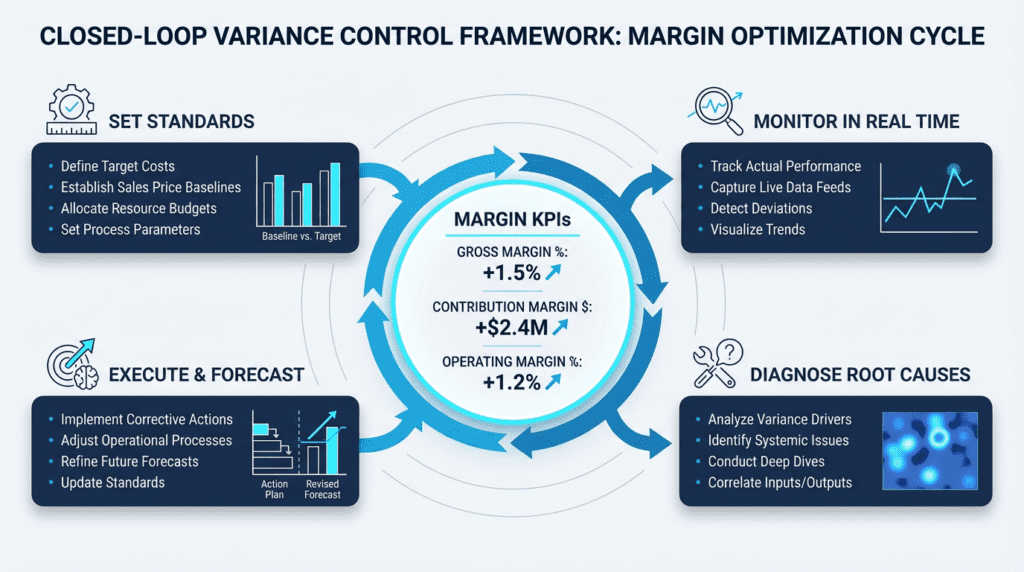
  • Uses variance analysis to identify performance gaps early.
  • Provides actionable recommendations to improve margin, cash efficiency, and ROI.

Cash Flow Management & Scenario Modeling

  • Builds 13-week and annual cash flow forecasts to anticipate liquidity needs.
  • Models best-case, base-case, and downside-case scenarios to prepare for uncertainty.
  • Improves board and investor confidence through visibility and discipline.

Risk, Controls & Governance

  • Identifies financial and operational risks before they impact performance.
  • Strengthens internal controls and ensures GAAP compliance.
  • Supports audit readiness and maintains strong governance for lenders and investors.

Capital Strategy & Stakeholder Communication

  • Prepares investor-ready reports and data-driven narratives.
  • Supports equity, debt, or M&A initiatives with credible financial modeling.
  • Improves communication with boards, private equity partners, and lenders through structured insight.

Why Fractional CFOs Fit Growing Companies

For many scaling businesses, hiring a full-time CFO isn’t practical or necessary yet. A fractional model provides flexibility, depth, and senior experience on demand.

  • Scalable: Access high-level expertise aligned to your stage of growth.
  • Cost-Effective: Pay only for the scope and cadence you need.
  • Objective: Gain an external perspective to challenge assumptions and improve systems.
  • Collaborative: Strengthen—not replace—your existing controller and accounting team.

The result is a finance function capable of steering (not just recording) growth.

Building a Partnership Between Controller and CFO

Bringing in a CFO doesn’t replace your Controller—it amplifies their impact. The most effective finance functions treat the two roles as complementary.

  1. Clarify Responsibilities
    Controllers oversee accounting operations and reporting. CFOs guide financial strategy and planning. Defined boundaries prevent overlap and improve collaboration.
  2. Integrate Systems and Data
    Unified visibility across ERP/accounting, CRM, and operations enables real-time insight into profitability and cash flow.
  3. Establish Communication Cadence
    Regular collaboration between Controller and CFO ensures reporting accuracy supports forward-looking planning.

Mature finance leadership is about alignment, not hierarchy.

Ascent CFO Solutions: Your Strategic Growth Partner

At Ascent CFO Solutions, we help growth-minded companies evolve from operational accuracy to strategic foresight.

Our Fractional CFOs bring experience across FP&A, cash flow and financial modeling, capital strategy, and board communication.

We partner with Controllers and leadership teams to refine systems, strengthen governance, and build the financial roadmap that turns growth into stability.

Whether you’re preparing for funding, optimizing cash flow, or navigating expansion, we provide the clarity and confidence that true financial leadership delivers.

Speak to a CFO

If your finance team keeps the numbers right but lacks the strategic direction to guide what’s next, it’s time to explore a more forward-looking approach.

Schedule a discovery discussion with Ascent CFO Solutions to assess how fractional financial leadership can help your business scale with clarity, confidence, and control.

Shopify Sales Report Template

Download Our Free Sales Report Template For Shopify

Free Tools

Need to quickly see how your Shopify store is performing? Instead of looking at raw data from Shopify, this tool organizes the information into clear reports, including a weekly sales report and order flash report.

Simply export your shopify sales report as an excel file or CSV and paste the data in the last tab, and our formulas do the rest!

Open Template

  • Easy to Use

    Just paste your raw data from Shopify

  • Clearer Insights
    Get quick and clear sales reports
  • Diagnose Trends
    See where your business is heading and run reports weekly
  • Made by CFOs
    Our tool is designed by experienced financial experts

CFO Services

Contact Us

Questions or business inquiries regarding our part-time CFO, finance and accounting services are welcome at: info@ascentcfo.com

Speak to a CFO

Continue reading

Scale Up Series: How to Build a Strong Foundation for Scalability

Scale Up Series: Part 3

This article is Part 3 of the Scale-Up Series. Please read Part 1: “Are You the Bottleneck? A Founder’s Guide to Growth and Scale” and Part 2: “Why Every Growing Business Needs a Roadmap.”

Key Takeaways

  • Build flexible, scalable infrastructure from the start rather than waiting for systems to fail under growth pressure.
  • Track metrics that directly impact growth and financial health and transform them into real-time dashboards for proactive decision-making to fuel your growth.
  • Implement rolling financial forecasts that evolve with reality to anticipate cash shortfalls and maintain adequate runway as you scale.
  • Prioritize integrated systems that create a single source of truth across finance, operations, and customer management, solving real problems today while scaling tomorrow without costly mid-growth platform switches.
  • Growth requires evolving from managing everything to designing systems where the right people make the right decisions through clear roles, autonomy within aligned goals, and structured communication rhythms.

Moving from startup to scale-up is one of the most exhilarating points in an entrepreneur’s journey. You’ve proven your concept, gained some traction, and have customers who believe in your solution. But here’s the reality: reaching your next growth curve requires intentional systems, smart infrastructure, and financial clarity to make sure growth is sustainable rather than chaotic.

In this article, part of our Scale Up Series, we’ll:

  • break down what infrastructure really means for a scaling business
  • look at the warning signs that your systems are breaking under growth pressure
  • share why designing for scale from the beginning saves headaches down the road
  • reveal which financial and operational systems matter most. 

From KPIs and dashboards to cash flow forecasting, SOPs, and technology, we’ll give you both strategic insight and tactical examples you can apply immediately.

Signs Your Systems Are Breaking Under Growth Pressure

Rapid growth is thrilling. There are new customers, new sources of revenue, and expanding opportunities. But growth often uncovers hidden cracks in your foundation. Here are a few telltale signs that your systems aren’t keeping pace with your ambition:

  • Missed deadlines and dropped balls: What used to be manageable with a small team becomes overwhelming as tasks multiply.
  • Lack of visibility into your business: You’re unsure where money is going, or you don’t have a clear view of real-time performance metrics.
  • Cash surprises: Payroll, vendor bills, or tax obligations sneak up because there’s no consistent forecasting model.
  • Burnout creeping in: The team spends more time firefighting than strategizing.
  • Fragmented data: Sales, marketing, and finance use different tools, none of which talk to each other.

If these symptoms sound familiar, you’re not alone. Most companies encounter them when scaling. But waiting until systems “break” before fixing them is costly. Anticipate these stress points and build for scale ahead of time.

Design for Scale from the Beginning

Many entrepreneurs focus their energy on product development or customer acquisition, leaving infrastructure as an afterthought. But retrofitting systems later can feel like rebuilding the foundation of a house while people are still living inside it.

The better approach? Design for scalability from the start. This doesn’t mean building out every possible process prematurely. It means identifying the core systems that will carry your business through the next stage of growth and putting flexible structures in place early.

Key Financial and Operational Systems for Scale

At the heart of scalable infrastructure is financial clarity. Entrepreneurs don’t need to become experts in finance, but they do need systems that turn financial & operational data into insights — and insights into decisions. Let’s explore the four core pillars.

1. Establish KPIs That Align with Business Growth Goals

Key performance indicators (KPIs) are the scorecard of your business. Without them, you’re flying blind. But not all metrics are created equal. Vanity metrics (like website traffic or social followers) may feel good but don’t necessarily drive growth.

Instead, focus on KPIs that align with your vision and strategy. Common examples include:

  • Revenue growth rate
  • Gross margin
  • Customer acquisition cost (CAC)
  • Customer lifetime value (LTV)
  • Churn rate
  • Cash conversion cycle

The key is to select a handful of KPIs that reflect both your financial health and your growth trajectory. For a SaaS business, this might mean monthly recurring revenue (MRR) and churn. For an eCommerce company, it could be average order value and repeat purchase rate.

From KPIs to Dashboards

KPIs are most powerful when you can see how you’re performing in those areas in real time. That’s where live dashboards come in. A well-designed dashboard integrates data from your accounting system, CRM, and other platforms to give you a clear view of your performance at a glance.

Dashboards answer questions like:

  • Are we on track to meet our revenue goals this month?
  • Is our cash position improving or declining?
  • Which products or customer segments are most profitable?

At Ascent CFO Solutions, we offer Insights by Ascent CFO, a tool that brings KPIs into focus for leaders. With live dashboards, you’re making proactive decisions for tomorrow.

💡 Offer for eCommerce founders: Get our free KPI Tool for Shopify and eComm companies to get started tracking the right metrics today.

Speak to a CFO
An Experienced CFO is Within Reach

Get right-sized financial leadership from experienced CFOs ready to lead your team.

2. Implement Cash Flow Forecasting and Rolling Financial Models

One of the biggest killers of growing businesses isn’t lack of revenue — it’s running out of cash. Growth consumes cash quickly, and profitable companies can still fail if cash flow isn’t carefully managed.

Cash Flow Forecasting

A cash flow forecast projects when cash will come in and when it will go out, helping you anticipate shortfalls before they become crises. For example:

  • If you know payroll is due in two weeks but receivables won’t arrive for four weeks, you can plan ahead for financing or adjust spending.
  • Seasonal businesses can prepare for revenue dips by building cash reserves during peak months.

Rolling Financial Forecasts

While budgets are static, rolling forecasts evolve with reality. Instead of planning once a year and locking it in, you update forecasts quarterly (or even monthly) with actual results.

This approach helps answer critical questions:

  • If revenue slows down, where can we cut costs to preserve the runway?
  • If sales accelerate, do we have the capacity and cash to deliver?
  • How does a potential price increase affect our projections?

A rolling forecast acts like a financial GPS. If conditions change, don’t scrap the whole map.  You just adjust the route.

3. Standard Operating Procedures (SOPs)

Financial visibility is crucial, but growth also demands consistency in operations. That’s where Standard Operating Procedures (SOPs) come in.

Documenting repeatable processes, such as onboarding, invoicing, customer service, and expense approvals, eliminates ambiguity and saves time. SOPs:

  • Reduce training time for new hires
  • Improve accuracy and accountability
  • Free leadership to focus on strategy instead of micromanaging details

The earlier you start codifying your processes, the easier scaling becomes. As we’ve mentioned before, AI tools make SOPs a less arduous task for founders. Record your screen, upload the video to your AI tool of choice, and ask it to create a process document from it.

4. Technology That Grows With You

Your tech stack can be your best friend or your worst enemy. The wrong tools create silos, waste time, and generate frustration. The right ones create efficiency, clarity, and speed. As your company scales, the technology choices you make become even more critical — because switching platforms mid-growth is costly and disruptive.

Consider:

  • Communication Hubs: As your team expands, email becomes a bottleneck. Platforms like Slack or Microsoft Teams create real-time communication channels that reduce inbox overload. Organized by topics, projects, or departments, they help maintain focus while ensuring critical conversations don’t get lost. For distributed or hybrid teams, these hubs are essential for keeping culture and collaboration alive.
  • Task/Project Management: Tools like Asana, Monday.com, or ClickUp provide structure and accountability as your to-do list outgrows sticky notes and spreadsheets. With clear task assignments, deadlines, and progress tracking, teams stay aligned without constant check-ins. The goal is transparency — everyone knows who is responsible for what and when.
  • Finance Systems: Early on, QuickBooks or Xero may be enough to manage accounting. But as complexity increases — multiple entities, international transactions, or subscription billing models — you may need a more robust system like NetSuite or Intacct. Choosing the right finance system at the right time prevents painful migrations later and gives leadership confidence in the accuracy of the numbers driving decisions. Contact us for guidance on the best finance & accounting system for your business or assistance migrating to an ERP system.
  • Integrations: The most powerful tech stacks are interconnected. CRMs, ERPs, HR systems, and finance tools should “talk” to each other, creating a single source of truth. Without integrations, you risk fragmented data, duplicate entries, and manual reporting that eats up valuable time. The right integrations free your team from chasing spreadsheets and let them focus on strategy. At Ascent CFO Solutions, we help companies integrate their systems into a live dashboard to serve as a single source of truth for their company. Contact us to learn more.

The golden rule: choose technology that solves a real problem today and has the capacity to scale with you tomorrow. 

Speak to a CFO
An Experienced CFO is Within Reach

Get right-sized financial leadership from experienced CFOs ready to lead your team.

Signs That It’s Time to Upgrade Your Tech Stack

  • Your team spends hours manually entering the same data into multiple systems.
  • You can’t generate reliable reports without stitching together spreadsheets.
  • Different departments use disconnected tools that don’t share information.
  • License costs are climbing but efficiency isn’t improving.
  • Decision-making slows down because leaders don’t trust the data.
  • Onboarding new team members takes too long because tools are confusing or inconsistent.
  • Customer experience suffers due to delays, errors, or miscommunications caused by system gaps.
  • You’re paying for multiple apps that duplicate functions instead of consolidating.
  • Scaling operations (e.g., more customers, new locations, new products) feels impossible without a complete overhaul.
  • Security risks increase because data is scattered across too many unmonitored platforms.

If any of these sound familiar, your technology is holding back your growth. Addressing these gaps now can prevent bigger disruptions later.

Team and Process Scaling (A Preview)

Financial and technical systems form the backbone of scalability, but they’re only half the equation. The real engine of growth is your people. As your company grows, your team and processes must evolve in lockstep with your infrastructure. Otherwise, even the best strategy will grind to a halt.

Scaling introduces new complexities that small teams rarely face: layers of management, multiple departments, competing priorities, and increased pressure on communication. To stay effective, leaders must shift from “managing everything” to designing a system where the right people can make the right decisions at the right time.

Here are three areas where scaling businesses often hit inflection points:

1. Evolving Organizational Structure

At five people, a flat structure works fine. Everyone talks to everyone. At fifty, that structure breaks down. Reporting lines become blurred, decisions slow, and accountability fades. Scaling requires evolving your org chart intentionally: defining roles, responsibilities, and decision rights so that growth doesn’t devolve into chaos.

2. Promoting Autonomy Without Losing Alignment

Entrepreneurs often struggle to let go of control, but growth demands it. Teams must be empowered to make decisions without waiting for executive sign-off on every detail. That autonomy, however, has to be grounded in clear goals and shared values. Done well, autonomy speeds execution while keeping everyone moving in the same direction.

3. Maintaining Coordination Across Teams

As departments expand, silos naturally form. Marketing might not know what Product is building, or Finance may be left out of operational planning. To counteract this, scaling companies need strong communication rhythms: weekly team check-ins, cross-functional planning sessions, and shared documentation systems. The goal is to make coordination the default, not the exception.

Scaling your team is less about adding headcount and more about evolving how the team works together. This means cultivating a leadership culture that balances autonomy with accountability, and coordination with speed. We’ll dive more into this topic in the next article in the Scale Up Series.

Putting It All Together: The Roadmap to Scalable Infrastructure

Scaling a business is both art and science. On one hand, growth is a series of structured steps that successful companies consistently follow. On the other, each step introduces complexity unique to your industry, product, and team.

The good news is, with the right infrastructure, you can:

  • Anticipate problems before they derail you.
  • Make confident decisions rooted in data.
  • Align your team around a common set of goals.
  • Preserve cash while fueling growth.

At Ascent CFO Solutions, we help entrepreneurs build these systems early so scaling feels less like chaos and more like momentum.

Turn Vision into Action

Scaling doesn’t mean doing everything at once. It means strategically building with the right systems in place. Whether you’re wrestling with KPIs, forecasting cash flow, or deciding which tools belong in your tech stack, you don’t have to do it alone.

Ascent CFO Solutions connects you with experienced fractional CFOs who specialize in helping startups and scale-ups design infrastructure that fuels sustainable growth. From financial forecasting to operational dashboards, our team provides the expertise you need, when you need it.

💡 Remember, we also have our KPI Tool for eComm Companies and eComm founders to start tracking the right metrics and build success. Ready to scale with confidence?

Book a call with a Fractional CFO and start building the foundation for your next stage of growth.

An Experienced CFO is Within Reach

Start Building Financial Clarity Today