


Key Takeaways
- Private equity firms now hold portfolio companies for an average of 6.5 years, with exit timing driven by value creation milestones, operational improvements, and market conditions rather than fixed timelines.
- Business owners can influence their exit timeline by focusing on financial infrastructure, operational improvements, and continuous exit readiness, which can accelerate or optimize exit opportunities.
- Early and ongoing preparation—including robust financial systems, integrated reporting, and strategic planning—is essential for maximizing value and maintaining flexibility in private equity exit scenarios.
Private equity firms now hold portfolio companies for an average of 6.5 years, with many extending well beyond the traditional four to five year window. The days of quick flips are largely over. Value creation progress, not calendar dates, drives when sponsors decide to exit their investments.
How long do PE firms hold portfolio companies depends on several key factors. Fund strategy, debt structure, growth momentum, and market conditions all influence whether an exit happens in year three or extends to eight years or more.
Smart business owners, prepare for flexible timing by building exit readiness capabilities early, regardless of their current ownership structure. Partner with Ascent CFO Solutions to develop the financial infrastructure and strategic planning needed to capitalize on any exit window.

Typical Private Equity Holding Periods and Exit Windows
When you’re running a $10M revenue business and planning your next growth phase, understanding private equity ownership timelines becomes part of your strategic roadmap. These investment periods directly impact your planning horizon, capital needs, and the systems you’ll need to build for eventual exit readiness.
The Standard Window: Four to Seven Years
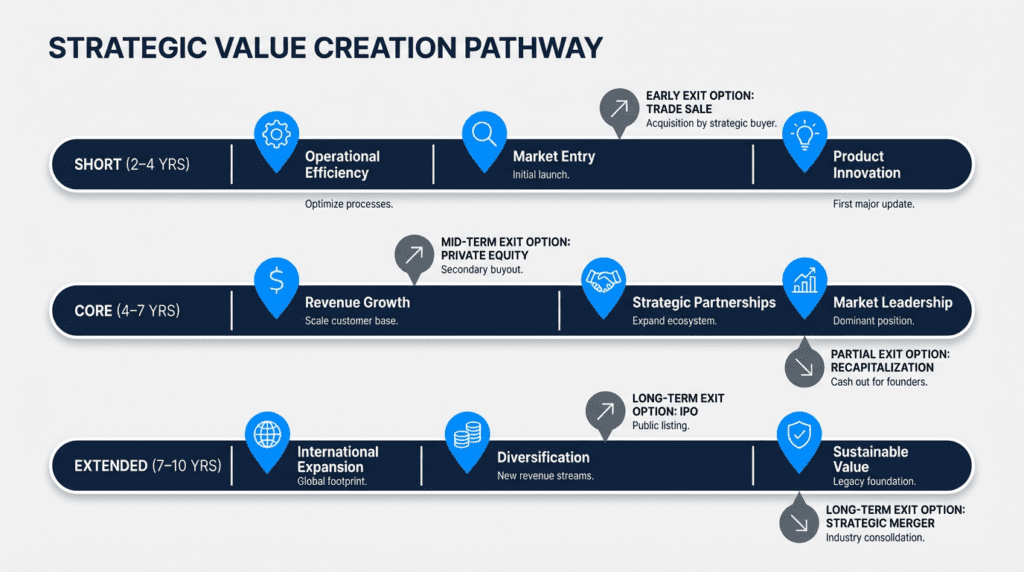
Most private equity firms plan for a four to seven year ownership period when they acquire a company. Industry research reveals the average investment timeline has extended to over 6.5 years, with more than 16,000 companies currently held for longer than four years. This baseline reflects the time needed to improve operations, grow revenue, and prepare for sale at attractive valuations. When PE firms evaluate companies for acquisition, they measure your business against this timeline.
On the Faster End: Two to Four Year Exits
Some portfolio companies exit ahead of schedule when growth or consolidation plans exceed expectations. A focused 28-month value creation roadmap, for example, might target specific revenue milestones and margin improvements that make the company irresistible to strategic buyers. Companies that rapidly scale revenue, improve profitability, or become attractive acquisition targets often see exits in the two to four year range. Strong financial systems and comprehensive exit preparation position you for these accelerated opportunities.
When Timelines Extend: Seven to Ten Years
At the other end of the spectrum, complex transformations often require longer investment periods. Ownership periods have increased in recent years due to integration challenges, technology upgrades, and market conditions. A 69-month hold (approximately 5.75 years) represents a reasonable extended timeline for businesses undergoing significant operational changes like system integrations or market expansion. However, returns flatten after seven to eight years, creating natural pressure for exit planning.
What Factors Influence the Holding Period of Private Equity Portfolio Companies?
The factors influencing private equity holding period decisions directly impact mid-size business owners planning their growth trajectory and exit timing. Understanding these drivers helps you maintain financial control while maximizing enterprise value.
- Operating performance improvements drive faster exits through EBITDA growth, sales efficiency gains, and margin expansion from pricing and cost initiatives
- Debt structure requirements affect timing as companies must meet deleveraging targets and maintain covenant compliance before exit
- Market conditions impact exit windows, with higher borrowing costs extending hold periods as buyers face financing challenges
- Financial systems readiness can shorten diligence by months through clean audits, integrated reporting, and transparent KPIs
- Buyer interest levels vary by industry and economic cycles, affecting whether trade sales or secondary buyouts offer better valuations
Companies that focus on operational improvements while maintaining exit readiness can influence their timeline and maximize returns. The next consideration is how different exit strategies shape these holding period decisions.
How Do Private Equity Exit Strategies Impact the Timeline?
Strategic sales and secondary buyouts drive the fastest exits when growth targets are met and market conditions favor buyers. Strategic buyers pay premiums when they see synergies, making early exits attractive after 2-4 years if growth targets are hit. Secondary buyouts to other PE firms suit steady performers with established track records, landing in the 4-7 year range. According to Bain’s 2025 report, sponsor-to-sponsor sales have increased as firms seek assets with proven models.
In contrast, IPO exits extend timelines because public markets demand repeatable growth and clean, reliable reporting. Companies need 12-24 months of exit preparation to meet regulatory standards and investor expectations. Research shows PE firms often retain significant stakes post-IPO, creating staged exits over multiple years that push total holding periods longer. This is why private equity exit strategies impact holding period decisions, with IPOs pushing toward the 7-10 year range despite potentially higher valuations.
Private Equity Timeline FAQ for Business Owners
Business owners often face uncertainty about PE investment horizons and exit planning. These answers address common timeline questions with practical guidance based on current market conditions and proven preparation strategies.
What should business owners know about private equity timelines and preparing for an exit?
Current PE holding periods average over 6.5 years, with many firms holding companies longer due to elevated entry multiples and limited exit opportunities, according to McKinsey’s analysis. Start building exit readiness at least 18 months before any anticipated transaction to avoid rushed preparations.
How can management influence a shorter holding period without risking operational stability?
Focus on accelerating value creation through systematic improvements rather than cutting corners. Implement rolling forecasts, strengthen reporting systems, and hit growth milestones consistently. Portfolio companies that demonstrate predictable performance and clean financials often attract earlier exit interest from strategic buyers seeking well-performing assets.
When should we start exit readiness work if we’re PE-backed or considering investment?
Begin readiness work immediately after closing any PE transaction or 24 months before seeking investment. Bain research shows funds are increasingly using alternative exit options like partial sales, making continuous readiness valuable for capturing unexpected opportunities or secondary transactions.
What financial systems should be in place before any PE exit process begins?
Establish integrated revenue tracking, cohort analysis, and unit economics dashboards that provide real-time visibility. Clean audit trails, documented processes, and automated reporting reduce diligence timelines by weeks. Consider whether your CFO has the transaction experience needed to manage complex exit processes effectively.
How do market conditions affect our exit timeline planning?
Market volatility can extend holding periods by 12-24 months beyond original plans. Maintain flexible capital structures and avoid covenant pressure that limits exit timing options. Strong companies with diversified revenue streams have more control over their exit windows regardless of broader market conditions.

Prepare Now: Align Value Creation With Flexible Exit Timing
Prepared business owners build financial infrastructure today to prepare for private equity exit timeline flexibility. Implement rolling forecasts and driver-based planning to stay ready for any exit window. Exit readiness work should begin 12-24 months before anticipated transactions.
Beyond forecasting, integrate revenue, cohort, and unit economics into investor-ready models that provide a single source of truth. This preparation accelerates diligence and strengthens valuations when exit opportunities emerge. Clean data and transparent reporting create optionality regardless of timing.
Ready to design your value-creation roadmap and exit preparation strategy? Ascent CFO Solutions can help you build the financial foundation that scales with PE timelines and maximizes your exit potential.

Contact Us
Questions or business inquiries regarding our part-time CFO, finance and accounting services are welcome at: info@ascentcfo.com

